

AFTER THE HUNT
Genre: Drama, Thriller
Directed by: Luca Guadagnino
Starring: Julia Roberts, Andrew Garfield, Ayo Edebiri
Release: October 17, 2025
Platform: Theatrical
Rating: 3/5
By Crystal Justine
AFTER THE HUNT is a dramatic thriller that tries to lure you in with its philosophical weight but ends up drowning in it. The film stays underwater far too long, spiraling in its own ideas instead of coming up for much-needed air. Luca Guadagnino is a phenomenal director with a resume full of risk and controversy (Queer, Call Me By Your Name), but this one isn’t as bold. It’s just…fine. Thoughtful, yes. But also, undeniably mediocre.
The story follows a college professor (Julia Roberts) caught at both a personal and professional crossroads. Her student (Ayo Edebiri) levels an accusation against one of her colleagues (Andrew Garfield), and the fallout forces her to confront a buried secret of her own. The narrative aims to peel back layers of truth. The truth regarding the accusation, as well as the tougher truths about power, morality, and all the gray areas people don’t want to admit exist.
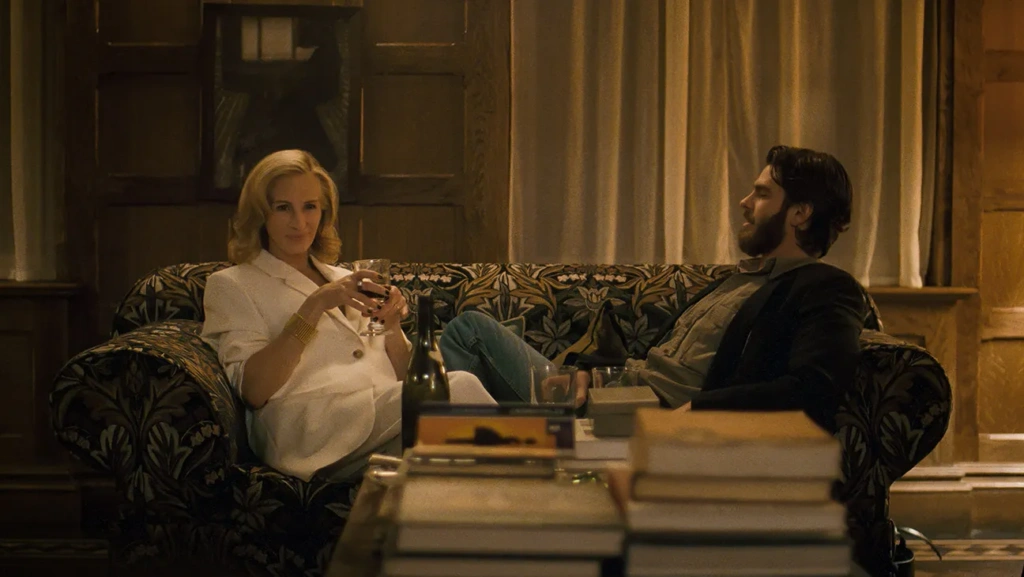
The approach is admirable, until it isn’t. Almost every major character is either a philosophy professor or a philosophy student, which means the dialogue is heavily toward pretentiousness. Anyone who’s ever survived a semester of philosophy knows it takes an Olympic-level amount of confidence and vocabulary to debate subjects like metaphysics and morality. Unfortunately, the script leans into that to a fault. The film digs and digs, but eventually it’s just tunneling into the same point. By the third act, the spiraling becomes tedious, draining the story of the intensity it could’ve sustained with cleaner pacing and sharper restraint.
What keeps the film alive are the performances. Julia Roberts is the anchor of AFTER THE HUNT. She is elegant, poised and cold, which gives exactly what you’d expect of her caliber. Andrew Garfield walks a tightrope between charismatic professor and cornered, unraveling man delivering some strong moments. Ayo Edebiri gives a decent performance, but she occasionally feels miscast, which could be due to the seasoned actors surrounding her or the writing for her character.
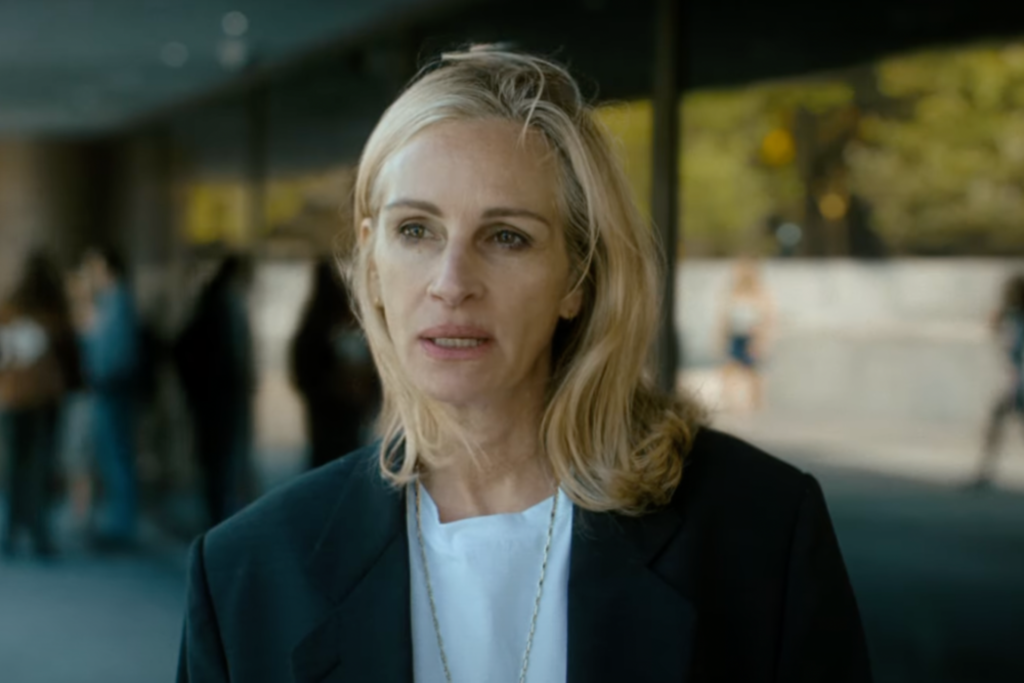
Visually, the film is beautiful. The subdued color palette and meticulous costuming, especially for Roberts and Edebiri, creating a subtle visual dialogue of black-and-white morality clashing on screen. The camera work will divide people. Some of the angles and movements feel a bit disorienting, while others will find them bold and refreshing. One of the smartest choices is how the film uses close-ups on hands, faces, and physical interactions. You see consent or you see hesitation. You see non-verbal refusal. The film actually shows power dynamics visually, instead of over-explaining them with unnecessary dialogue.
The “controversial” element here is the subject matter. The film deals with sexual assault. Some viewers think its inclusion feels unnecessary or in poor taste, but the unfortunate truth is that it reflects real life. According to RAINN, college-aged women face the highest risk of sexual assault, and the vast majority of cases go unreported. The film doesn’t exploit that reality; it confronts it. Not perfectly, but honestly.

The film confronts sexual assault in a way that reflects the reality many women face, which is becoming a victim in more ways than one. Without concrete evidence, everything collapses into a “he said, she said”, and women are often met with disbelief—sometimes even from the people closest to them. Reporting the assault becomes a burden in its own right, especially when the perpetrator is well-liked, respected, or holds a position of power. The dynamic flips: the accused is treated as innocent until proven guilty, while the woman is treated as a liar until proven otherwise. And for the victim, the aftermath never fully ends. The violation becomes a shadow that follows her, a stain she never asked for and never deserved. This is an element the film handles well, showing the main layers of what it means to survive an assault, and how the weight of that label lingers far longer for the victim than it does for the person who caused it.
AFTER THE HUNT has strong components from impressive performances, a gorgeous use of color, and a compelling thematic core. The issue is the foundation of any film, the script. The pacing drags, the dialogue loops, and the film can’t resist circling the same drain repeatedly when whole scenes could’ve been cut. It’s watchable. It has something to say. But with a tighter script, it could’ve been something far more powerful.


