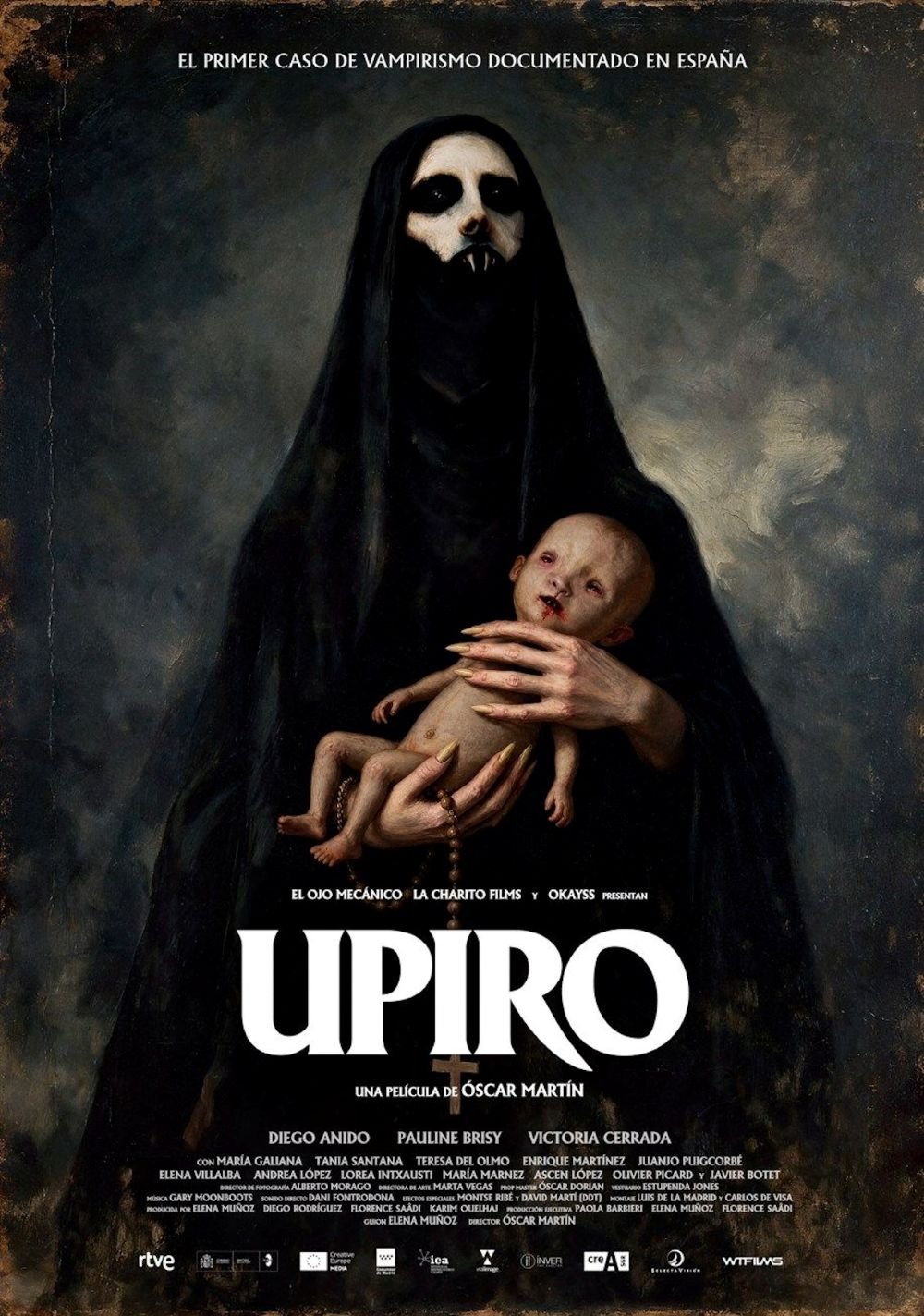
Genre: Horror / Historical / Vampire
Release Date: September 18, 2026 (Fantastic Fest World Premiere)
Release Platform: Theatrical (Spain, February 19, 2027)
Star Rating: 4/5
By Bryce Pane
“Martín takes a monster we’ve seen several times and finds a way to make it feel mysterious again.“
Vampires have to be one of the most overused monsters in horror movie history, having been a centerpiece of the genre for the last one hundred years. Naturally, that means creating a fresh take on the creature is a difficult task, yet Óscar Martín’s Upiro manages to give the bloodsucker some new life. Set in 1755 and inspired by what is described as the first case of vampirism documented by the Catholic Church in the Iberian Peninsula, Upiro follows Ana, a young woman who seems more trouble than she’s worth. In response to her debauchery, her father sends her to a remote monastery in hopes of reforming her.
Slowly, Ana starts to get accustomed to this new life that she’s found herself in and even begins to grow closer to the other sisters at the monastery, despite the strictness of the Mother Superior and the devout practices of those around her. She learns that many of these women came to the monastery by choice, while she has been forced into this life. That difference gives Ana an interesting perspective on the world she’s suddenly been thrown into, especially as she begins to realize that there is much more going on within these walls than she initially thought.
Something is hiding in the monastery, causing strange bite marks to appear on the feet of the sisters, while several of them begin suffering from a mysterious blood disease. The film takes its time building up to the reveal, but never once does it lose its intrigue. In fact, that slow build is exactly why this film works so well. You’re constantly questioning what could possibly be happening and whether you’re watching some kind of illness, religious hysteria, or something far more sinister. When the truth finally starts to come together, it’s incredibly rewarding to see all of those little pieces fall into place.
I also really enjoyed how Upiro uses its period setting for more than just aesthetics. This is a story taking place during the Age of Enlightenment, when scientific thinking was beginning to challenge older ideas surrounding superstition and the supernatural. That creates a really interesting clash between faith, science, and folklore, especially as the investigation begins pointing toward the ancient legend of the upiro. Instead of simply giving us another Dracula-inspired vampire story, Martín digs into an older form of vampire mythology and places it inside a setting where religion and superstition already dominate everyday life.
The cinematography is beautiful, capturing this remote location in stunning color and detail. The monastery feels isolated and almost completely cut off from the outside world, which makes the slow descent into horror even more effective. There’s a real Gothic atmosphere throughout the film, and the location itself becomes one of the most important parts of the story.
Something that makes this film quite a bit more impressive is how much it subverts expectations. You constantly think that you know where this film is heading or that you’ve seen something like this before, only to be caught off guard by a surprise twist that you never would’ve thought of. Just when I thought I had figured out what Martín was doing, the movie would throw something else at me. That made the slower first half completely worth it once everything started coming together in the third act.
Period pieces are nothing new in the vampire genre, but Upiro manages to create a fresh and unique tale that truly feels like one of the more creative takes on the genre in years. Óscar Martín takes a monster we’ve seen countless times and finds a way to make it feel mysterious again, while the isolated monastery, religious themes, beautiful cinematography, and slow-burning mystery all come together for a vampire movie that kept me locked in. It takes its time getting there, but once Upiro starts cooking, it absolutely delivers.