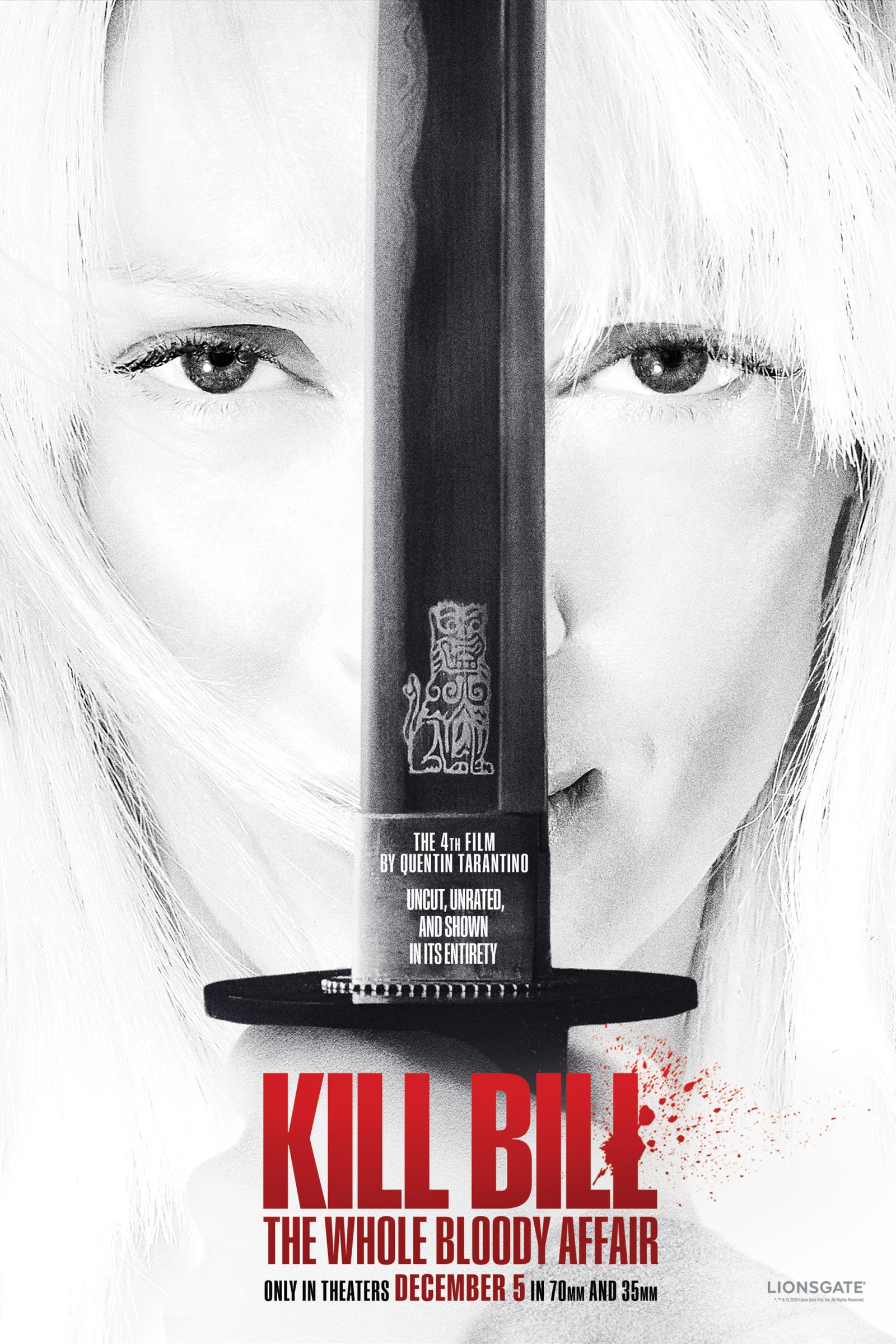
KILL BILL: THE WHOLE BLOODY AFFAIR is something fans of the original Kill Bill Vol. 1 and Vol. 2 have wanted for more than twenty years. The two films were originally made as one epic film, but the studio felt the film was too long, and for the era, it honestly probably was. It would have been a fascinating experiment in 2003 to release a four-and-a-half-hour Quentin Tarantino film. At any rate, twenty-two years later, we finally get the director’s original film intact with a ten-minute intermission.
The changes to the original two films are subtle at first glance, but they significantly alter the emotional beats of the film and enhance the world-building. The added violence and recut fight scenes also further hammer home Tarantino’s homage to classic martial arts films of the 70s and Japanese horror films too. There are hints of De Palma throughout, as well as influences from Italian crime films and thrillers known as giallo. Watching KILL BILL: THE WHOLE BLOODY AFFAIR is like watching a history of 70s grindhouse cinema classics in a single movie. Watching Vol. 1 and Vol. 2 was also a grindhouse history lesson, but experiencing them as a single film is epic, and it feels like these Easter eggs matter more. They are not just winks at genre fans; they are important pieces of the world-building. It’s like using a needle drop to hammer home an emotional beat. Tarantino uses these homages as a storytelling tool to deepen the moments in which they exist. Plus, he just loves these movies, and he loves remixing them.
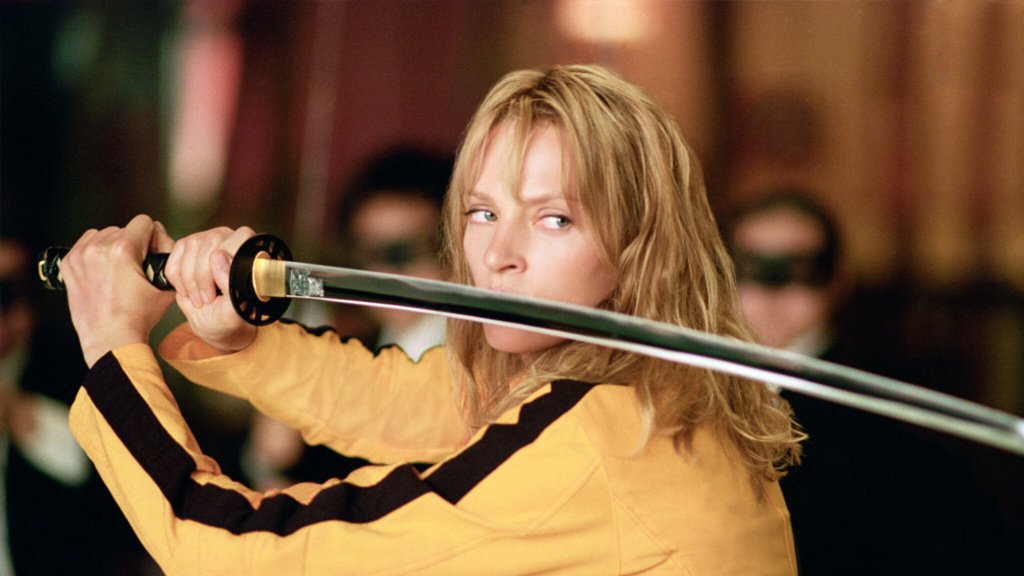
When it comes to footage, there are two main changes, one addition and one removal. The addition extends the animated backstory for O-Ren Ishii. The added, super violent sequence builds more on the character’s motivations and decision making. This final kill in the animated sequence shows her transition from killer for revenge to killer for profession. This added kill fully bridges young O-Ren to the powerful woman and leader she is in the film. The biggest removal from the two films is the cliffhanger monologue at the end of Volume 1 where the audience learns that The Bride’s baby does, in fact, live. This scene was added to build anticipation for the second film, but as a single unified film the scene ruins the emotional arc of The Bride. By removing this scene, the audience finds out about the child at the same moment in the film that The Bride finds out, which makes that scene hit much harder than it originally did in Vol. 2. Another black and white scene featuring The Bride talking directly into camera, recapping the events of Volume 1, was also removed because it is no longer necessary.
Something that always bothered fans is that during the fight with the Crazy 88s some sequences switch to black and white to keep the film at an R rating. While those scenes look fine, the switch is jarring and lacking intent. They clearly exist just to soften the gore. In KILL BILL: THE WHOLE BLOODY AFFAIR the black and white is gone, and some bits of gore that were originally removed are back in place. The gore is extremely over the top, almost comical, which fits perfectly with the classic martial arts aesthetic and works even better than it did in the theatrical version of the fight. That fight not only mimics Bruce Lee’s Game of Death but also films like The Five Deadly Venoms and The Flying Guillotine. The fight now feels appropriate to the overall vision of the film.
So, was Miramax right to break the film up, or is THE WHOLE BLOODY AFFAIR a masterpiece? The answer is this is the film that QT made. What we’ve been seeing for over twenty years was a compromise with the studio. That compromise gave us two fantastic films for sure, but this is absolutely the Masterpiece that Kill Bill was always supposed to be. Does this singular film still have the minor issues the two original films had? Absolutely it does. It’s still overstuffed with exposition and longer than a grindhouse film needs to be, but if it’s your cup of tea, you’re down to savor it for the whole four hours and forty-one minutes. The longer I savor this tea, the more I like it and can’t wait to have another cup. The question is, now that we have this version, does that mean QT has only written and directed eight films rather than nine?